Commercial Freezer Leaking Water? Troubleshooting Guide
Understanding Commercial Freezer Water Leaks
Finding puddles around your commercial freezer is more than just a messy inconvenience for your kitchen staff. Water on the floor creates immediate slipping hazards during busy shifts while pointing to hidden mechanical problems inside your cooling system. Left unaddressed, even minor leaks can spoil valuable food inventory and lead to costly emergency service calls.
Commercial refrigeration units work continuously under tough kitchen conditions to maintain consistent freezing temperatures. When water begins pooling around the base, it usually means the system cannot route meltwater away properly during defrost cycles. Identifying where this moisture originates helps you protect your equipment and keep your kitchen operating safely.
Mountain operations face extra atmospheric pressure changes and low indoor humidity that strain cooling components over time. These regional climate factors cause minor drainage restrictions to escalate into major flooding much faster than at sea level. Quick diagnostic action prevents structural floor damage and keeps your health inspection scores high.
Common Root Causes of Refrigeration Leaks
Clogged Defrost Drain Lines
Clogged defrost drain lines are the single most frequent reason water overflows onto commercial kitchen floors. Over months of heavy daily use, organic debris, food bits, grease, and ice slush collect inside the narrow drain channel. Once blocked, condensate has nowhere to go and spills out from the interior drain trough onto your floor.
Severe Evaporator Coil Frost
Severe frost accumulation across the evaporator coils also triggers heavy melt-water spills during automated defrost cycles. When airflow across the coils drops due to dirty filters or weak fan motors, thick ice builds up rapidly. When the defrost cycle fires up, it melts more ice than the standard drain pan can handle at once.
Damaged Door Gaskets
Damaged or worn door gaskets allow warm, humid room air to leak into the freezing compartment constantly. As this warm air meets freezing internal surfaces, excess moisture forms along walls and door frames. This condensation continuously trickles down the cabinet exterior, collecting around the front feet of the freezer unit.
Cracked Condensate Pans
Cracked condensate pans or failed drain line heater wires cause immediate localized flooding under the equipment. In colder high-altitude regions, extreme temperature swings can cause plastic trays to crack or cause drain line heaters to short out. When this happens, meltwater freezes inside the line and overflows during the next cycle.
Step-by-Step Troubleshooting Process
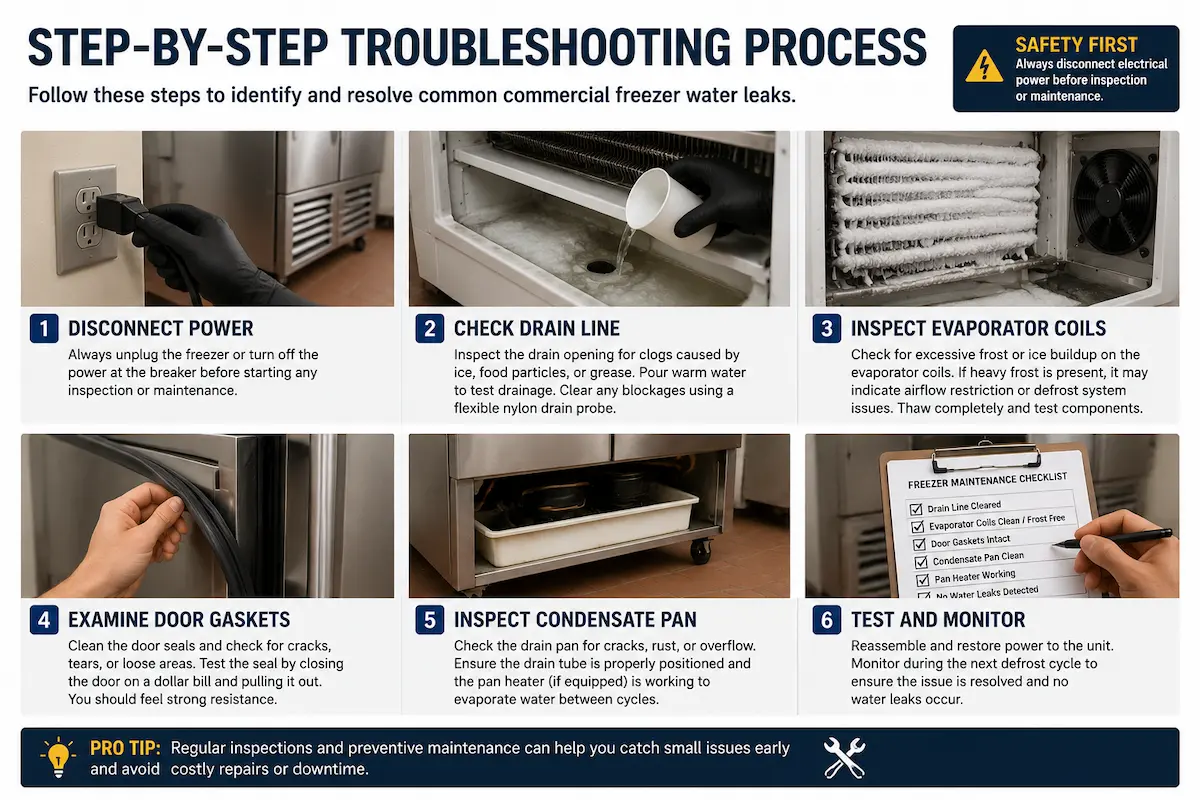
Always disconnect electrical power to the unit before performing any hands-on inspection or maintenance task inside the cabinet. Start your check by removing food items surrounding the rear evaporator section to access the drain trough cleanly. Safety and clear visibility make diagnosing the exact cause of the leak much easier and faster.
Check the drain opening for visible ice blockages, food particles, or accumulated grease layer buildup. Pour a cup of warm water into the trough to test how quickly it moves down the line. If the water stands still, clear the obstruction using a flexible nylon drain line probe without puncturing internal hoses.
Inspect the aluminum fins on your evaporator coil assembly behind the interior panel. If you see a heavy block of frost covering the coils, your unit is suffering from airflow restriction or defrost control failure. Allow the system to thaw completely before testing fan operation and thermostat responsiveness.
Examine the flexible rubber door seals around the entire perimeter of your freezer frame. Clean away built-up kitchen grease using warm water and mild soap, then check for cracks or loose sections. Test the seal strength by closing the door on a dollar bill and feeling for firm resistance when pulling it out.
Access the lower compartment underneath or behind the unit to inspect the exterior condensation pan. Look closely for hairline fractures, heavy rust spots, or misaligned discharge tubes that allow water to miss the pan entirely. Verify that the heating element operates properly to evaporate standing water between cycles and maintain proper commercial refrigeration safety practices.
High-Altitude Climate Challenges for Mountain Kitchens
Operating commercial cooling gear in high-mountain environments presents unique mechanical challenges that coastal venues never experience. Lower barometric pressure affects refrigerant expansion rates and thermal transfer efficiency inside compressor lines. These physical differences mean mountain units require precise calibration to manage frost buildup effectively.
Cold mountain winters force indoor heating systems to run constantly, lowering humidity levels inside restaurant kitchens. These sudden environmental shifts speed up frost formation across cold surfaces and increase the risk of frozen drain lines. Regular seasonal checks ensure your drainage system handles these rapid humidity fluctuations without failing.
Establishing a routine inspection schedule keeps your commercial refrigeration units working reliably through peak tourist seasons. Preventative maintenance reduces energy consumption, protects expensive inventory, and extends the operational lifespan of your kitchen equipment. Taking proactive care avoids costly emergency repairs during your busiest shifts.
Preventative Maintenance Practices for Long-Term Reliability
Keeping a daily operational log helps kitchen managers notice small temperature changes or minor pooling before full equipment failure. Routine checks should include testing door latches, cleaning condenser coils, and clearing drain pathways every few weeks. Consistent attention keeps your refrigeration gear operating at peak performance year-round.
Teach your kitchen staff to report any small standing water spots near refrigeration units immediately upon discovery. Quick reporting prevents long-term floor deterioration, stops mold growth under equipment bases, and eliminates slip hazards for employees. Early intervention is always cheaper than repairing major water damage later through proper preventative maintenance services.
Working with certified commercial refrigeration technicians ensures complex electrical controls and defrost systems stay calibrated correctly. Professional servicing protects your food safety compliance, minimizes unexpected operational downtime, and keeps energy bills low. Expert maintenance gives restaurant owners total peace of mind during heavy service periods.
Frequently Asked Questions
Why is water leaking under my commercial freezer?
It is usually caused by a blocked defrost drain line, frozen evaporator coils, or worn door seals. When drainage paths get clogged with ice or food debris, meltwater overflows directly onto your kitchen floor.
Can high altitude cause my freezer drain line to freeze?
Yes, lower humidity and atmospheric pressure at higher elevations accelerate frost buildup on evaporator coils. If your drain line heater isn’t functioning properly, meltwater freezes inside the line before it can drain.
How do I unclog a commercial freezer defrost drain?
Unplug the unit and flush warm water down the drain trough inside the compartment. Use a flexible, non-abrasive drain probe to gently push out trapped ice, grease, or food particles without puncturing the pipe.
How often should
commercial refrigeration drain lines be checked?
Inspect and flush your drain lines every three months as part of routine kitchen maintenance. High-volume restaurant kitchens should check them monthly to prevent sudden backups during peak operating hours.