Walk-in freezer repair Frisco service becomes critical when a freezer breaks down at 9,000 feet elevation. When holding temperatures start climbing above zero, you only have a short window before thousands of dollars in steaks, seafood, and prep stock go bad. Getting a local technician on-site fast can help protect your inventory and keep the kitchen running during a rush.
Operating commercial refrigeration along Frisco’s Main Street or near Lake Dillon comes with unique mountain challenges. The thin Alpine air makes it much harder for rooftop condensers to shed heat, while cold winter nights can freeze exposed drain lines in minutes. Reliable commercial refrigeration service can help catch those high-altitude issues early before your compressor completely quits.
Direct Answer: Why Do Walk-In Freezers Fail in Frisco, CO?
Walk-in freezers in Frisco usually fail because of heavy evaporator coil icing, failed defrost heaters, or high head pressure caused by thin air. At 9,097 feet above sea level, lower air density reduces thermal heat transfer across outdoor condensing coils, especially during warm summer weekends. Clearing air blockages, resetting defrost clocks, and replacing bad door gaskets usually get box temperatures back down to sub-zero levels.
High-Altitude Challenges for Frisco Commercial Refrigeration
Running low-temp commercial freezers in Summit County isn’t the same as servicing equipment down in Denver. The thinner air up here reduces the actual mass of airflow moving across outdoor condenser coils. This means your compressor has to work significantly harder and run longer cycles to dump heat, which leads to higher operating temperatures and faster oil breakdown.
Our rapid mountain weather changes also throw off mechanical control systems if they aren’t tuned properly. Uninsulated suction lines and exposed drain runs freeze up fast on sub-zero winter nights, causing defrost water to back up and turn your freezer floor into an ice rink. Installing heavy-duty heat tape and proper pipe insulation is mandatory for keeping drain lines flowing year-round.
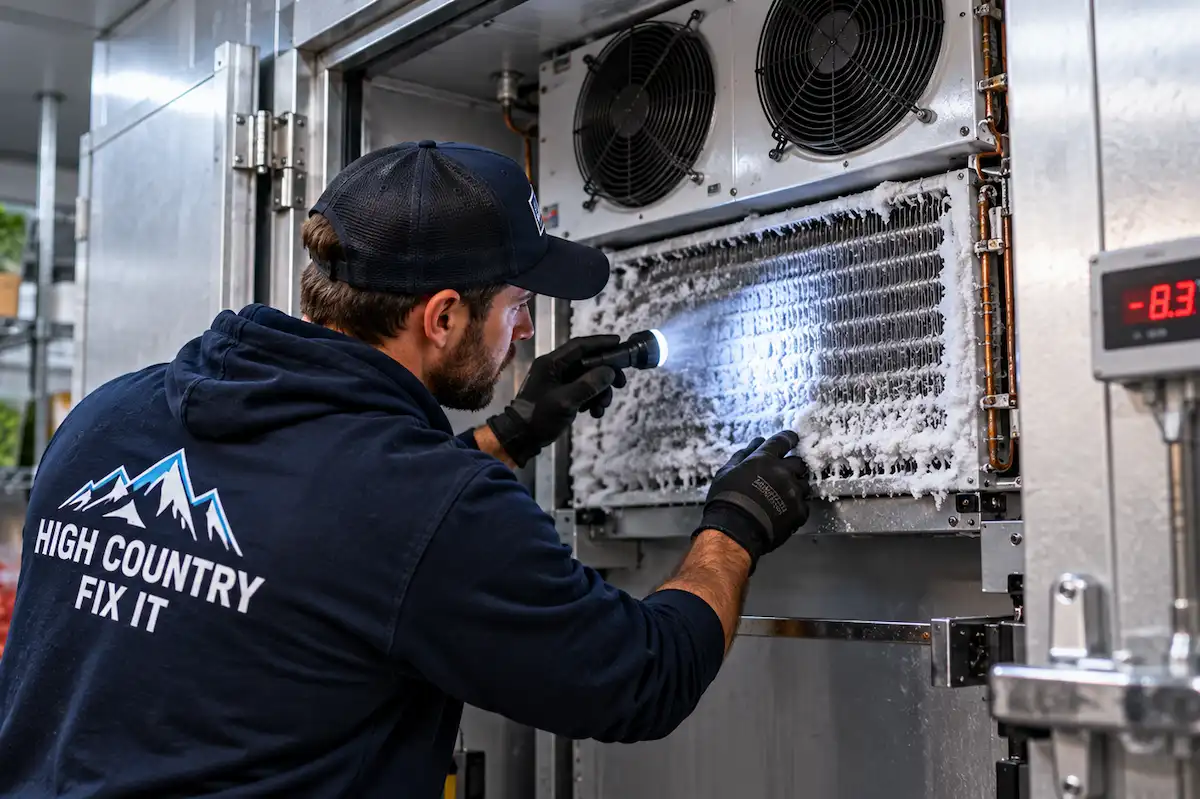
When tourist season hits Frisco, kitchen doors slam open and shut constantly all day long. That constant stream of warm, humid air entering the box hits the freezing evaporator coil and turns into frost almost immediately. Proper walk-in freezer defrost operation is essential because frost buildup can eventually block airflow across the coil and push box temperatures upward. If defrost heaters or termination controls are not working correctly, that frost can turn into a solid block of ice.
Key Hardware Components in High-Elevation Walk-In Freezers
Core Refrigeration Components & High-Country Failures
| Freezer Hardware | Primary Equipment Function | Common Mountain Failure Point | Required Service Action |
| Compressor Unit | Circulates refrigerant under high pressure | Overheating from thin air & long run times | Check oil clarity & monitor head pressure |
| Evaporator Coil | Pulls heat out of the freezer box | Solid ice buildup blocking air fins | Test defrost elements & termination switch |
| Thermal Expansion Valve (TXV) | Controls refrigerant flow into the coil | Superheat drift caused by altitude pressure | Recalibrate superheat for 9,000+ ft |
| Door Gasket & Frame Heater | Seals the box & stops perimeter frost | Cracked rubber letting warm air leak in | Swap damaged gasket & check heater line |
Your walk-in freezer relies on a tight balance between mechanical parts, electrical controls, and refrigerant flow. The compressor pumps hot gas out to the condensing unit to dump heat, while the expansion valve feeds liquid refrigerant into the indoor coil to pull heat out of the room. If any single component drifts out of spec, the whole cooling cycle collapses.
Because freezer coils operate well below freezing, frost naturally builds up on the aluminum fins during normal operation. Built-in electric defrost heaters turn on a few times a day to melt that frost away before it turns into thick ice. If a defrost timer fails to initiate or a heater wire burns out, ice will cover the entire coil face within 24 hours.
Worn or torn door gaskets are another huge culprit behind sudden temperature spikes in busy mountain kitchens. Damaged rubber seals let room-temperature air get sucked inside, causing heavy frost to build up around the door frame and ceiling guards. Swapping out old magnetic seals keeps the cold air locked in and takes massive strain off your compressor.
Troubleshooting Common Commercial Freezer Breakdown Symptoms
Quick Diagnostic Guide for Restaurant Managers
| Problem Symptom | Immediate Root Cause | On-Site Inspection Point | Recommended Technician Action |
| Box Temp Rising Above 0°F | Solid ice on the coil or low refrigerant | Check fan guards for heavy ice buildup | Force manual defrost & test gas pressure |
| Compressor Running Non-Stop | Dirty condenser coil or bad door seal | Inspect outdoor coil fins for dirt/debris | Deep clean coil & replace worn door gasket |
| Water Pooling on Freezer Floor | Frozen or clogged drain line | Look at the drain pan & check the line heater | Melt ice block & replace bad heat tape |
| Ice Building Near Door Frame | Burnt-out perimeter door heater | Touch the door frame to feel for a warm circuit | Replace the internal frame heater wire |
When your box temperature starts creeping up toward 15°F, checking the indoor coil is always the best first step. If you see a solid wall of white ice hiding behind the fan guards, your defrost cycle has stopped working, or warm air is leaking in non-stop. Manually switching the clock into defrost lets us test whether the heating elements are actually drawing electrical current.
If your outdoor compressor unit runs continuously without cycling off, dirty condenser fins are usually the blame. Dust, pine needles, and mountain debris build up quickly inside outdoor coil fins during spring and summer. Spraying the coils clean with a professional non-acidic cleaner lowers your head pressure and stops the unit from tripping its high-pressure safety switch.
Water freezing into sheets on the floor means defrost water cannot escape through the drain line when the heaters turn off. Problems with walk-in freezer drainage can lead to water leakage, ice buildup, and cooling issues if the drain line becomes blocked or the defrost system stops working properly. Clearing the drain line and replacing failed heat tape helps stop dangerous ice buildup before staff members slip and fall.
Preventative Care Checklist for Summit County Commercial Kitchens
Staying ahead of mechanical wear with routine maintenance is way cheaper than replacing thousands of dollars in spoiled food. Scheduling thorough tune-ups before the summer rush and winter ski season keeps your equipment ready for heavy kitchen traffic. Catching weak parts early protects your compressor and cuts down your monthly electric bills.
- Clean Condenser Coils: Wash out pine needles, dust, and dirt from outdoor coils every spring and autumn.
- Test Defrost Systems: Check amp draw on defrost heaters, test termination switches, and verify timer settings.
- Inspect Door Seals: Check all four sides of door gaskets for tears, cracks, or air leaks that pull in moisture.
- Verify Drain Line Heaters: Test electrical continuity on drain heat tape to make sure condensate lines won’t freeze.
- Check Refrigerant Charges: Monitor operating pressures and inspect compressor sight glasses to catch leaks early.
Running through these basic maintenance checks keeps your equipment running smoothly through heavy weekend shifts. Taking care of small repairs early means you won’t have to make frantic midnight emergency calls when the restaurant is fully booked.
Professional EPA-Certified Service vs. DIY Kitchen Repairs
Having kitchen staff wipe down door seals and keep box aisles clear of boxes helps maintain decent airflow every day. Keeping food pans away from fan intakes stops air blockages and keeps temperatures even throughout the walk-in. But when it comes to open electrical panels or sealed refrigerant lines, you need a certified pro on-site.
Commercial freezers run on high-voltage power and use regulated refrigerants that require specialized licensing to handle. Trying to top off refrigerant without the right recovery gear or EPA Section 608 certification breaks federal law and can easily wreck your compressor. Certified techs carry the exact recovery machines, leak detectors, and digital gauges needed to do the job safely.
Setting up refrigeration gear at high altitude requires precise pressure-temperature adjustments that standard manuals don’t cover. Guessing on expansion valve superheat settings can send liquid refrigerant flooding back into the compressor, snapping internal valves in seconds. Professional commercial refrigeration repair helps ensure the system is tuned for Frisco’s elevation, operating pressures, and changing mountain conditions.
Frequently Asked Questions
How often should commercial walk-in freezers be serviced in Frisco, CO?
Your walk-in freezer should get a full professional checkup at least twice a year—once before winter ski season and once before summer. Regular maintenance keeps coils clean, verifies defrost timers, and prevents high-altitude compressor strain.
Why does my walk-in freezer ice up more during the summer?
Frisco’s higher summer humidity introduces extra moisture into the box every time the door opens during busy shifts. That moist air hits the cold evaporator fins and turns into frost immediately, making well-tuned defrost cycles critical.
What temperature should a commercial walk-in freezer hold?
Health codes require commercial walk-in freezers to hold steady between -10°F and 0°F at all times. Keeping box temperatures consistently below zero preserves food quality and prevents harmful bacterial growth.
Does high elevation really shorten compressor life?
Yes, thinner air at 9,000+ feet reduces cooling efficiency across outdoor condenser coils, causing compressors to run hotter and longer. Without regular coil washing and proper airflow tuning, compressors wear out much faster than they would at sea level.
Keep Your Kitchen Running Without Spoilage Disruption
Protecting your food stock and keeping your kitchen line moving takes reliable refrigeration equipment built for high-altitude demands. Regular system tune-ups catch worn components, electrical faults, and micro-leaks before they turn into full system failures. Count on experienced local technicians to keep your walk-in freezer holding solid sub-zero temperatures through every mountain season.