Commercial HVAC Maintenance Tips for Colorado Business Owners
Operating a commercial space in Breckenridge, Frisco, or Keystone means battling brutal winter conditions every single year. When ambient temperatures drop well below zero on a busy ski weekend, your heating equipment takes an absolute beating. A sudden boiler leak or rooftop unit failure doesn’t just chill your indoor dining room; it halts operations completely and turns away paying guests.
Most local managers only start calling technicians after cold air starts blowing out of their supply vents. That reactive approach gets expensive fast, especially when emergency holiday callout rates and long wait times stack up. Investing in structured commercial HVAC maintenance in Colorado protects your bottom line long before the first major winter storm rolls over the mountains.
Mountain climate conditions present unique mechanical risks that standard flatland maintenance protocols completely miss. From thin elevation air affecting gas combustion to heavy snowdrifts blocking intake louvers, your equipment demands specialized local care. Keeping your facility warm, compliant, and energy-efficient requires a proactive strategy built specifically for Summit County weather.
Why Summit County’s High Elevation Wrecks Commercial Systems
Elevation changes everything when it comes to mechanical airflow performance and thermodynamics. At 9,000 feet above sea level in towns like Dillon and Silverthorne, oxygen levels are roughly twenty percent lower than at sea level. Less dense air means your blower motors have to work significantly harder to move the same mass of air through your ductwork.
Gas-fired heating systems suffer even more without precise high-altitude burner adjustments. Standard gas valves delivering fuel calibrated for lower elevations will burn dirty, creating thick soot buildup across your heat exchangers. Over time, incomplete combustion increases carbon monoxide risks and drastically reduces heat transfer efficiency across the entire building.
Environmental exposure along the I-70 corridor accelerates physical wear on outdoor package units. Rapid freeze-thaw cycles force meltwater into tiny cabinet seams, expanding overnight into ice that warps metal housing and cracks coils. Heavy road salt kicked up near highways also corrodes aluminum fins, shortening system lifespan if left uncleaned.
Early Warning Signs Your System Needs Immediate HVAC Service
Commercial rooftop units rarely collapse without dropping subtle performance clues beforehand. Facility managers who train their staff to spot these early indicators can schedule routine repairs long before a total shutdown occurs. Catching a slipping belt during a routine walk-through costs a fraction of replacing a burned-out blower motor mid-season.
Pay close attention to inconsistent temperature zones across different areas of your property. If your retail floor feels like an icebox while back office storage stays uncomfortably warm, your system isn’t balancing air correctly. This usually points to stuck economizer dampers, failing zone actuators, or severe duct leakage hidden behind drywall.
Unusually high utility bills during mild weather windows are another clear warning sign. When coils get coated in grime or filters clog, compressors and burners run much longer cycles to reach set thermostat targets. If gas or electric charges spike without a matching increase in operating hours, your system is crying out for service.
Never ignore strange mechanical sounds coming from mechanical closets or rooftop curbs. High-pitched squealing usually indicates slipping fan belts or unlubricated motor bearings grinding down under continuous load. Loud metallic banging or rapid chatter often signals loose mounting hardware or failing electrical contactors that violate official HVAC maintenance guidelines and risk immediate breakdown.
Seasonal Commercial HVAC Checklist for Mountain Businesses
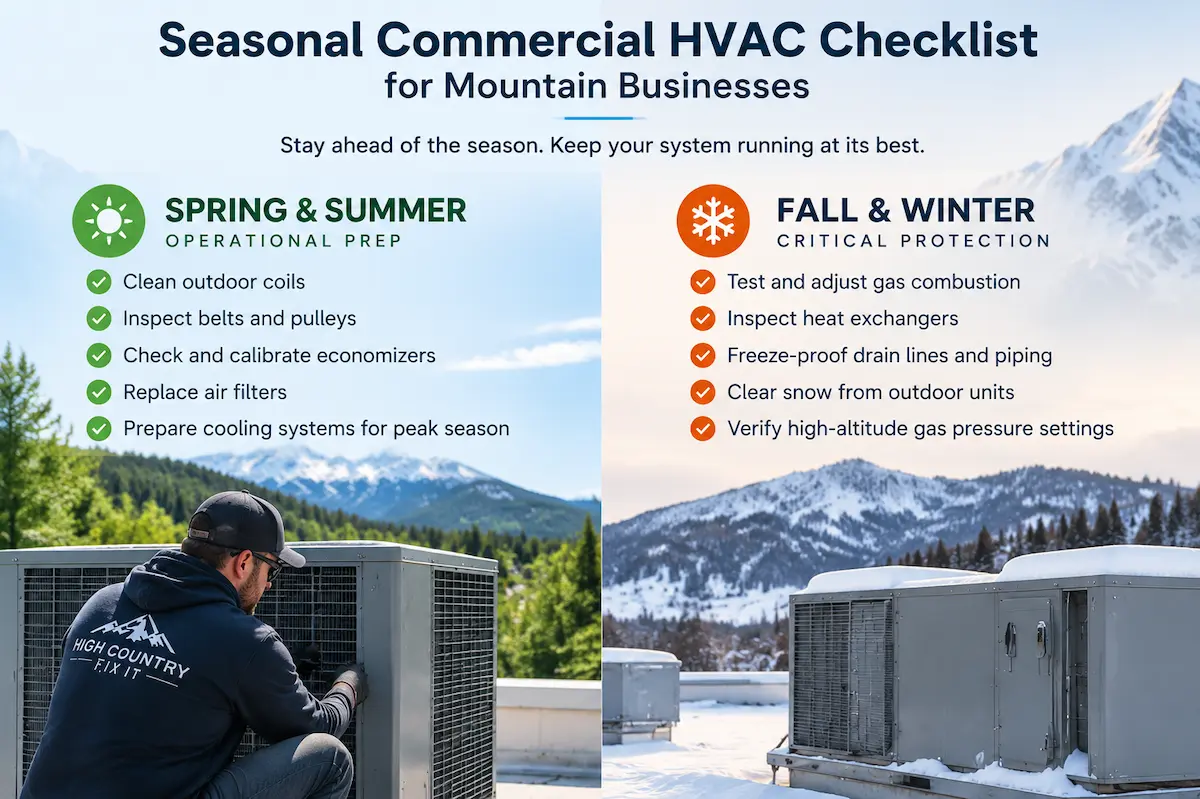
Spring & Summer Operational Prep
As winter snowpack clears out of Frisco, outdoor condensing units require a thorough deep clean. Pine needles, windblown dust, and road salt buildup pack tightly between delicate coil fins over cold winter months. Power-washing these coils with proper low-pressure chemical foam restores essential airflow and keeps summer head pressures manageable.
Inspecting belts, pulleys, and fan assemblies is equally critical before summer heat kicks in. Months of continuous cold-weather operation stretch rubber belts and wear down pulley grooves, causing power slippage. Replacing worn belts now ensures your air handlers deliver consistent cooling during peak tourist weekends when foot traffic surges.
Fresh air economizers need complete recalibration to take advantage of cool mountain evenings. When enthalpy sensors work correctly, your system pulls in free outside air instead of running energy-hungry compressors. Check damper linkages, clean intake screens, and replace clogged air filters with MERV-rated media designed for thin mountain air.
Fall & Winter Critical Protection
Autumn preparation in Summit County isn’t optional; it’s a critical race against the first freeze. Technicians must conduct rigorous combustion analysis tests on all gas furnaces and RTUs before ignition season starts. Inspecting heat exchangers for micro-cracks prevents deadly carbon monoxide leaks into customer-occupied areas during sealed winter months.
Freeze-proofing condensate drain lines and outdoor piping prevents catastrophic water damage inside your facility. Unheated rooftop lines require heavy-duty insulation wrapped with self-regulating heat tape to handle sub-zero night temperatures. A single frozen drain line can back up water into your building, destroying ceiling tiles and inventory below.
Gas manifold pressure requires precise adjustment to guarantee clean, efficient burning at high altitudes. Technicians should verify manifold pressure against manufacturer high-altitude derating charts for your specific elevation. Keeping burners dialed in prevents fuel waste, lowers utility bills, and stops premature heat exchanger failure.
How Preventative Maintenance Reduces Overall Operating Costs
Many business owners treat mechanical service as an unwanted overhead expense rather than an operational investment. However, emergency service calls during peak ski season in Breckenridge carry steep premium labor rates and lengthy contractor wait times. A structured preventative maintenance plan eliminates those panicked, high-cost emergency calls almost entirely.
Energy efficiency improvements provide immediate, measurable financial payback every single month. Clean heat exchangers, properly tensioned drive belts, and calibrated economizers consume significantly less gas and electricity. Over a full operating season, optimized systems cut commercial utility expenses anywhere from ten to twenty-five percent.
Extending the operating lifespan of expensive rooftop equipment saves tens of thousands in capital expenditure. Replacing a 15-ton commercial package unit can easily cost upwards of twenty thousand dollars with crane rentals included. Investing in routine commercial HVAC services like coil cleaning, oiling, and electrical tightening doubles equipment life, letting you defer capital replacement cycles for years.
Choosing the Best Commercial HVAC Maintenance Company in Colorado
Selecting the right service contractor in mountain communities requires looking beyond basic residential licenses. You need a dedicated commercial provider with proven experience working at elevations above 8,000 feet. Flatland contractors from Denver often lack the specialized tools and high-altitude calibration knowledge needed for complex mountain systems.
Confirm that prospective technicians hold current certifications for commercial refrigeration, complex rooftop controls, and high-altitude gas combustion. Your service provider should offer clear service level agreements with guaranteed emergency response times during severe winter storms. When mountain passes shut down, having a locally staged technician in Summit County makes all the difference.
Request detailed digital inspection reports complete with photos and combustion readout sheets after every visit. Transparent contractors document voltage draws, gas pressures, and component wear trends over time so you can plan capital budgets accurately. Knowing exact equipment health lets you schedule replacements during quiet off-seasons instead of mid-winter rushes.
Frequently Asked Questions
How often should Colorado businesses schedule commercial HVAC maintenance?
Commercial facilities in Summit County should schedule professional inspections at least twice a year. Schedule your spring tune-up in May to clear winter debris and prep cooling components. Book your fall inspection in September before nighttime temperatures plunge toward freezing.
Why do commercial systems in Breckenridge and Frisco require high-altitude
adjustments? Thin air at high elevations contains less oxygen per cubic foot, altering the fuel-to-air ratio during combustion. Unadjusted gas valves burn dirty, leading to heavy soot accumulation, carbon monoxide risks, and rapid heat exchanger decay. High-altitude derating ensures safe combustion and optimal heating performance.
What can business owners do to protect outdoor HVAC units from heavy snow buildup?
Maintain a cleared three-foot perimeter around all ground-level condensing units and heat pumps throughout winter. Clear heavy snowdrifts away from rooftop intake louvers and exhaust flues after every major storm. Blocking these openings trips internal pressure switches, causing sudden system shutoffs.