Walk-In Cooler Not Cooling? Quick Fixes That Actually Work
A Walk-In Cooler Emergency in Breckenridge
It was a busy Friday morning at a popular Breckenridge eatery, right in the middle of the breakfast rush. The head chef opened the walk-in cooler, only to be hit with a wall of warm air instead of a cold chill. The temp gauge read 50°F, leaving thousands of dollars in fresh meat, dairy, and local produce at serious risk of spoiling before lunch.
A warm unit on a peak weekend can paralyze a kitchen and destroy your profit margins in hours. The culprit in this case was simple: a heavily neglected condenser coil caked in airborne kitchen grease and mountain dust. Running non-stop during warm summer weather, the struggling system finally lost its ability to discharge heat properly.
Within two hours of the emergency call, a certified refrigeration technician Summit County business owners trust from High Country Fix It arrived. He cleaned the choked coils, restored proper airflow, and got box temperatures pulling down fast. The repair bill came out under $300, saving the restaurant over $3,000 in spoiled inventory and a week of lost sales.
This situation happens more often than you think across Summit County kitchens, lodges, and grocers. When your walk-in cooler isn’t cooling, restaurant prep becomes an active emergency; scheduling timely commercial refrigeration repair saves real money. Regular preventative care avoids eighty percent of these frantic breakdowns before your food ever warms up.
Step-by-Step Walk-In Cooler Troubleshooting
When temperatures start creeping upward, taking quick diagnostic steps helps narrow down the cause before calling for help. First, check your primary power switches, digital controllers, and circuit breakers to verify power is flowing. A bumped thermostat dial or a tripped breaker often mimics a major equipment breakdown when the system is actually fine.
Next, step inside the box and check the evaporator fans mounted near the ceiling. If the fan blades are turning but blowing weak air, look closely at the fins for heavy ice buildup. Excessive frost blocks critical airflow, keeping cold air from circulating across your shelving units and causing box temps to spike.
Door Seals and Internal Airflow
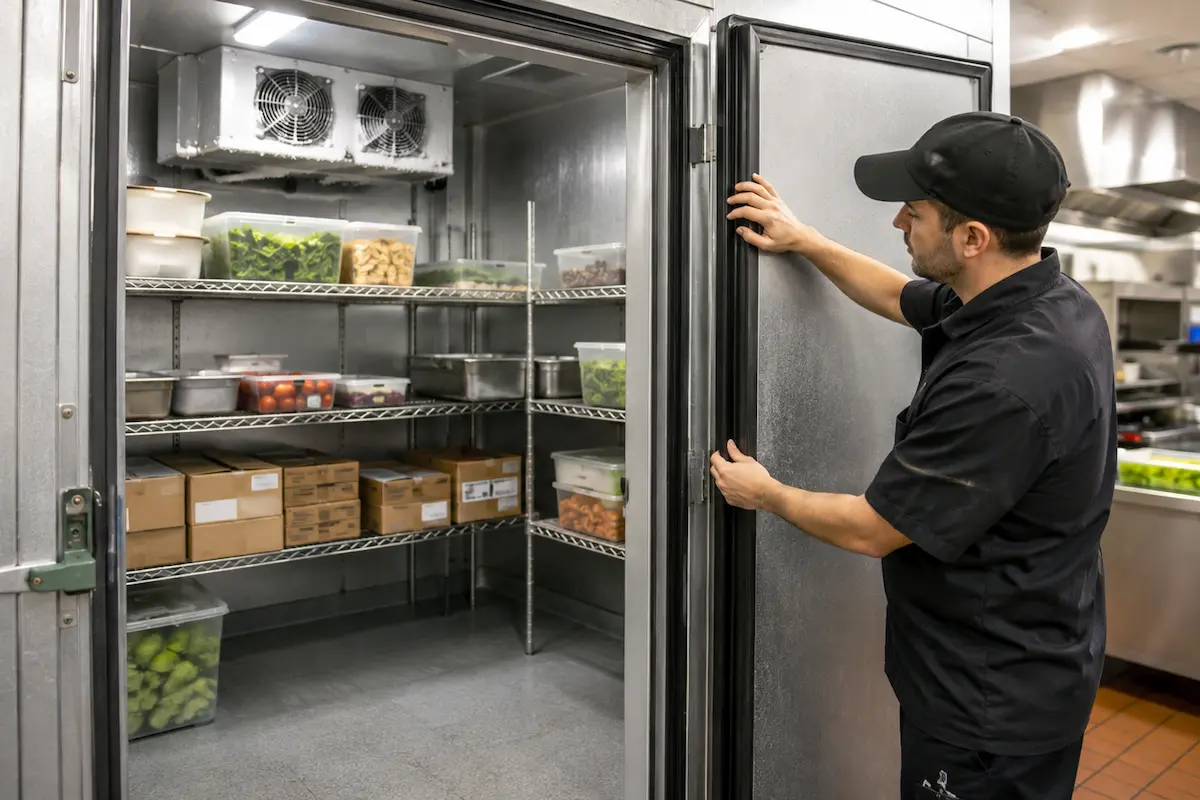
Inspect the rubber seal around the entire door frame for cracks, tears, or hard spots. Worn rubber lets warm, moist kitchen air leak continuously into the cold space, causing rapid icing and high utility bills. A quick door gasket replacement is one of the cheapest ways to protect system efficiency and maintain stable cooling. Finally, look at how your inventory is stacked along internal walls and near discharge vents.
Packing cases tightly against evaporator covers starves the room of proper air movement, creating random warm pockets. Leave at least three inches of space around wall perimeters so cold air circulates evenly throughout the cabinet, and follow commercial refrigeration efficiency guidance to maintain adequate airflow around refrigeration equipment.
Mechanical Failures That Need Commercial Refrigeration Repair
While minor airflow blocks are easy to fix in-house, deeper mechanical issues demand professional commercial refrigeration repair. Your condensing unit works hard outside the box, pulling heat away from internal coils and venting it outdoors. Over time, grease layer build-ups require aggressive condenser coil cleaning to keep operating pressures within safe working limits.
If your system runs continuously without lowering temperatures, you might have a hidden leak in the copper lines. Certified technicians perform thorough refrigerant leak detection using specialized electronic tools to find hidden cracks safely. Fixing these leaks preserves compressor life and ensures compliance with strict environmental regulations across Colorado.
Electrical and Defrost System Failures
Electrical components like contactors, capacitors, and fan relays also wear out from constant cycling. When these small electrical parts fail, your compressor motor may click, hum, or trip breakers repeatedly without starting. Prompt walk-in cooler repair prevents simple electrical failures from turning into complete, expensive compressor burnouts.
Defrost system failures can also cause unexpected temperature surges during peak operating hours. If a mechanical defrost timer freezes in heating mode, heater elements stay energized and warm up the box quickly. Prompt refrigeration repair can restore normal, automated cooling cycles before inventory gets damaged.
Altitude Challenges and Local Refrigeration Service
Operating cooling units in high-altitude environments like Breckenridge or Keystone brings unique technical challenges. Thin air and sudden mountain weather shifts change operational pressures, putting extra stress on commercial compressors. Partnering with an experienced refrigeration service provider ensures your equipment is calibrated correctly for elevation and seasonal climate shifts.
Local health regulations require walk-in boxes to stay strictly at or below 41°F to prevent foodborne illness. Maintaining consistent temp logs protects your food safety record and keeps your business fully compliant. When unexpected failures happen, having rapid restaurant equipment repair support protects both your reputation and revenue.
Searching online for commercial freezer repair near me during a sudden cooling breakdown requires fast local response times. Local technicians who understand mountain road conditions get to your site quickly with the right spare parts in their trucks. Comprehensive HVAC/R repair keeps all your kitchen hot and cold systems operating smoothly year-round.
Frequently Asked Questions
How often should condenser coils be cleaned on a commercial walk-in cooler?
Clean your condenser coils quarterly for standard operation, or monthly if located in grease-heavy kitchen lines. Keeping coils clear prevents severe compressor strain, lowers energy bills, and stops sudden cooling failures.
What immediate steps should I take if my walk-in cooler hits 50°F?
Keep the box door shut tight to trap cold air, then verify breakers and fan operation immediately. If basic checks do not drop the temperature within 30 minutes, call a professional technician right away.
Can kitchen staff add refrigerant to a walk-in cooler when temperatures rise?
No, refrigerant charging requires EPA certification and leak detection equipment to avoid damaging the compressor. A low charge always means a leak exists, which must be located and repaired by a professional technician.
When should I call a certified refrigeration technician in Summit County?
Call a pro if box temperatures remain above 41°F, breakers continuously trip, or coils re-ice within 24 hours. Sealed system leaks, electrical controls, and compressor work always require specialized technical tools and training.
Protect Your Summit County Business Today
A warm walk-in cooler is a serious emergency, but fast action and routine care keep your kitchen running strong. Cleaning coils, checking door gaskets, and logging daily temperatures will stop most breakdowns before they start. When unexpected cooling failures strike your business, High Country Fix It is ready to help fast.
Our EPA-certified technicians serve Breckenridge, Keystone, Copper, Dillon, Silverthorne, Frisco, Vail, and Eagle with honest rates. Call our team today for reliable walk-in cooler repair and preventative maintenance!