A walk-in freezer that stops maintaining temperature can quickly disrupt a busy commercial kitchen. Frozen ingredients begin softening, food safety becomes a concern, and staff must work around essential equipment. For restaurants in Summit County, Colorado, timely walk-in freezer repair can help prevent further disruptions, especially during the busy ski season.
When a walk-in freezer is not freezing properly, the cause may involve restricted airflow, damaged door seals, faulty controls, or refrigeration components. Some problems are easy to spot, while others require professional diagnosis. Understanding the warning signs can help you respond before a minor issue becomes an expensive interruption.
Why Is My Walk-In Freezer Not Freezing?
A commercial freezer may struggle to maintain temperature when warm air enters the room, cold air cannot circulate, or the refrigeration system cannot remove enough heat. Ice buildup, failed defrost components, and inaccurate temperature readings can create similar symptoms.
The most useful first step is to confirm the actual temperature with a reliable thermometer and record any changes. Check whether the problem appeared suddenly or developed over several days. If temperatures remain inconsistent, professional commercial refrigeration repair may be necessary. These details can help a technician identify the cause without unnecessary guesswork.
1. Damaged Door Gaskets Let Warm Air Inside
Every time employees enter a walk-in freezer, warmer air moves toward the cold interior. A properly closed door helps limit that exchange. When the rubber gasket becomes cracked, loose, or worn, warm, moisture-filled air can continue entering even after the door shuts. Look for frost around the doorway, torn sealing material, or gaps where the gasket meets the frame.
A door that doesn’t close completely may have misaligned hinges, a damaged latch, or an obstruction near the threshold. Inspect the visible gasket for cracks, gaps, or signs of wear, and remove anything preventing the door from closing properly. Keep the entrance clear and remind employees to shut the door firmly after every use. If the seal is damaged or frost keeps returning, arrange a professional inspection.
2. Blocked Airflow Prevents Even Cooling
Cold air needs room to circulate through a commercial freezer. When boxes are stacked against the evaporator or products block airflow paths, cooling becomes uneven. Some sections may remain cold while others grow noticeably warmer. The equipment may continue running without maintaining a consistent temperature.
This problem is common in busy restaurant kitchens where deliveries arrive frequently, and storage space fills up quickly. Overcrowded shelves can restrict airflow and make it harder for the freezer to maintain proper cooling. Products placed directly in front of evaporator fans may also interfere with circulation. Keeping storage areas organized helps cold air move throughout the unit.
What to check: Keep products away from airflow openings and follow the manufacturer’s recommended storage clearances. Check Danfoss refrigeration troubleshooting guidance for common airflow problems. Inspect accessible areas for visible obstructions without touching moving fans or electrical components. If airflow remains weak after clearing the space, the fan system may need professional service.
3. Evaporator Coils Are Covered in Ice
Ice buildup on an evaporator coil can restrict airflow and reduce cooling efficiency. You may notice uneven temperatures or a refrigeration system running longer than usual. Heavy frost can also develop around nearby panels or fan guards. These warning signs often indicate that the freezer is struggling to maintain proper cooling.
A frozen evaporator coil doesn’t mean the equipment is producing extra cooling. Instead, thick ice can block airflow and prevent the system from operating efficiently. Common causes include a faulty defrost system, excess moisture entering through the door, or restricted air circulation. Identifying the underlying problem is important to prevent recurring ice buildup.
What to check: Look for unusual frost accumulation from a safe location and note where it appears. Avoid chipping away ice with tools or applying direct heat to refrigeration components. Keep employees away from exposed electrical parts and moving fans. If frost continues to develop, a qualified refrigeration technician should inspect the system and correct the underlying cause.
4. The Defrost System Isn’t Working Correctly
Walk-in freezers use controlled defrost cycles to remove frost that develops during normal operation. Depending on the equipment, electric heaters, temperature sensors, timers, and electronic controls work together to manage this process. If a defrost cycle fails to start or ends too early, ice can gradually accumulate around the evaporator. This buildup restricts airflow and makes it harder to maintain consistent temperatures.
A faulty defrost system can affect the freezer’s overall cooling performance. As ice continues to accumulate, the equipment may run longer without reaching its required temperature. A defective drain heater can also allow water to refreeze in unwanted areas. These problems often require professional diagnosis to identify the failed component.
What to check: Review any alarms or fault messages displayed on the freezer controller. Record when heavy frost appears and whether it returns after a normal defrost cycle. Consult the Danfoss controller troubleshooting guide to understand common alarm codes, but avoid adjusting electrical controls or replacing heaters yourself. Leave electrical testing, heater repairs, and controller adjustments to trained refrigeration professionals.
5. Dirty Condenser Coils Reduce Cooling Performance
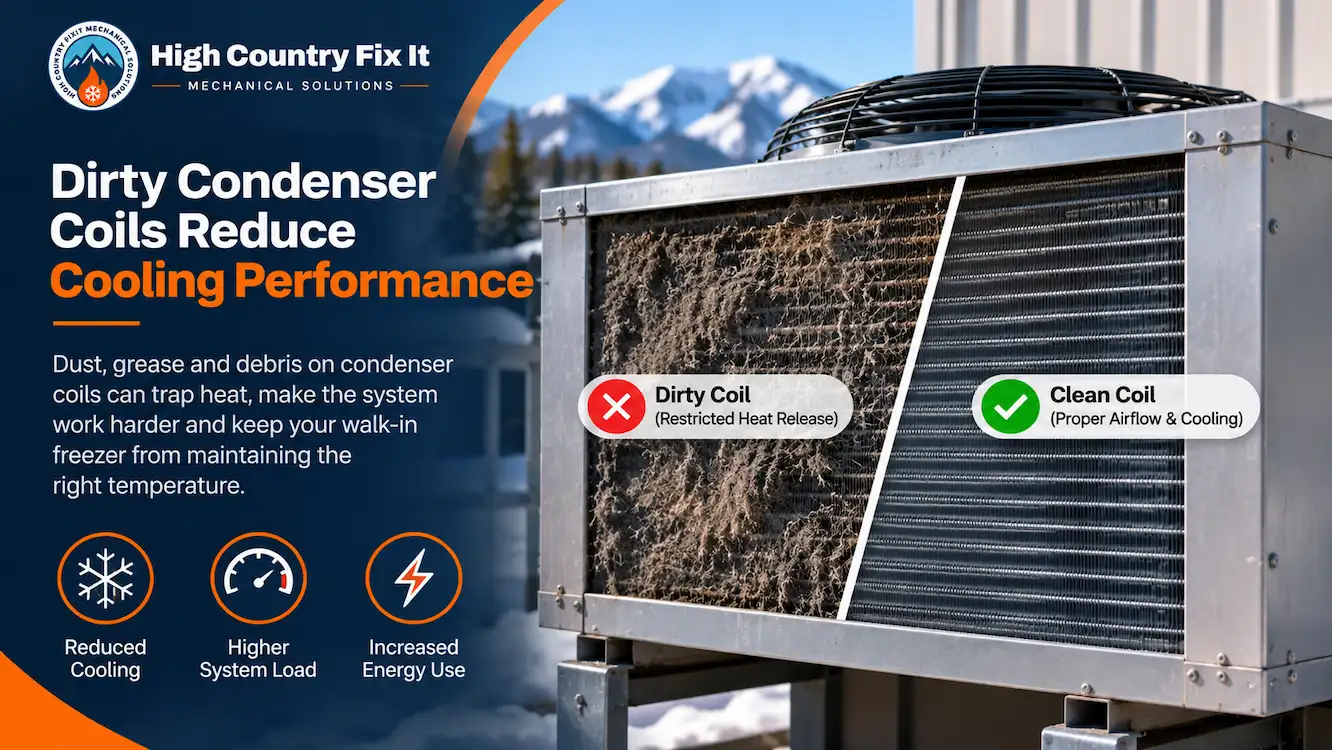
The condenser helps release heat removed from the freezer during normal operation. When dust, grease, or debris collects around the coils, heat transfer becomes less efficient and cooling performance may decline. Commercial kitchens often face demanding conditions, especially when refrigeration equipment operates near heat-producing appliances. Poor ventilation can make it harder to maintain consistent temperatures, even when the freezer’s interior appears clean.
What to check: Inspect accessible ventilation openings for dust, grease, or visible obstructions. Keep stored items away from the condensing unit to allow proper airflow. Professional maintenance should include checking coil condition, fan operation, and appropriate cleaning procedures. Never remove electrical covers or handle pressurized refrigeration components without proper training.
6. Temperature Controls or Sensors Are Giving Incorrect Readings
Sometimes the freezer operates normally, but its controls fail to measure or respond to temperature accurately. A faulty sensor, incorrect setpoint, or controller issue can affect when the refrigeration system starts and stops. The display may show a different temperature from an independent thermometer, creating confusion for employees. Although this difference doesn’t always indicate a defective sensor, it provides useful information for troubleshooting.
What to check: Compare the freezer’s displayed temperature with a reliable independent thermometer. Check whether both readings remain consistent over time, as explained in our guide to commercial refrigeration repair. Confirm the approved operating setpoint using the equipment manual and your facility’s food safety procedures. Avoid changing advanced controller settings without professional guidance, as incorrect adjustments can affect cooling performance.
7. Compressor or Refrigerant Problems Need Professional Diagnosis
The compressor plays an essential role in maintaining the freezer’s required temperature. If it malfunctions, the equipment may run for extended periods without cooling properly. Restricted refrigerant flow or leaks can cause similar problems. Warning signs include unusual noises, repeated shutdowns, inconsistent temperatures, or alarm messages, making professional diagnosis important before replacing any components.
What to do: Record the freezer’s temperature, operating behavior, and any displayed error messages. Note whether the cooling problem developed gradually or appeared suddenly. Avoid adding refrigerant, bypassing safety controls, or opening sealed refrigeration lines yourself. Commercial walk-in freezer repair involving compressors and refrigerant systems should always be handled by qualified technicians with appropriate equipment.
How Summit County’s Mountain Conditions Affect Commercial Freezers
Businesses in Breckenridge, Frisco, Keystone, Dillon, and Silverthorne operate in a mountain environment with seasonal temperature changes and demanding service schedules. Restaurants may experience particularly heavy kitchen traffic during ski weekends, holidays, and busy tourist periods.
High elevation also matters when selecting, installing, and evaluating certain refrigeration systems. Equipment performance depends on its design, operating conditions, ventilation, and manufacturer specifications. The surrounding climate alone should never be treated as proof of a particular mechanical fault.
For mountain restaurants, reliable temperature monitoring and preventative maintenance are practical ways to protect operations. Checking seals, keeping airflow paths open, and arranging seasonal inspections can reveal developing problems before equipment stops cooling properly.
What Should You Do When a Walk-In Freezer Gets Too Warm?
Protecting food should come before attempting a mechanical repair. Check and document the actual temperature, notify the person responsible for food safety, and minimize unnecessary door openings. Follow your written food safety procedures for evaluating affected inventory.
If temperatures are unsafe or rising, use suitable working refrigeration to protect products when possible. Keep records of temperatures, time, and corrective actions. Do not assume food is safe simply because it still feels cold or contains ice crystals.
Next, record the freezer model, visible alarms, and recent operating changes. This helps the service provider understand the situation. Avoid repeatedly resetting breakers or restarting malfunctioning equipment, as unresolved electrical or mechanical faults may require immediate attention.
Professional Walk-In Freezer Repair in Summit County, CO
When basic checks don’t explain a temperature problem, professional diagnostics are the next step. High Country Fix It provides commercial refrigeration and mechanical equipment services for businesses throughout Summit County and surrounding communities.
The company services commercial refrigeration equipment, including walk-in freezers, and offers troubleshooting, repairs, and preventative maintenance. Its service area includes Breckenridge, Frisco, Keystone, Dillon, Silverthorne, and nearby mountain communities.
If your kitchen equipment is struggling to maintain its required temperature, contact High Country Fix It at (970) 368-2855 or submit a service request online. Addressing the actual cause can help restore reliable operation and reduce unnecessary downtime.
Frequently Asked Questions
Why is my walk-in freezer running but not getting cold?
Restricted airflow, dirty condenser coils, heavy evaporator icing, faulty controls, or refrigeration system problems may prevent proper cooling. Start by checking the temperature, door seal, and visible airflow obstructions. If the system continues running without reaching its setpoint, professional diagnosis is recommended.
What temperature should a commercial walk-in freezer maintain?
Many commercial freezers are commonly operated around 0°F (-18°C) or colder, depending on product requirements and the equipment’s intended use. Follow the manufacturer’s specifications, applicable food safety rules, and your facility’s approved procedures rather than relying on a universal setting.
Can a damaged door gasket cause freezer ice buildup?
Yes. A poor seal allows warm, moisture-filled air to enter the freezer. That moisture can form frost around the entrance or contribute to ice accumulation elsewhere. Replacing a damaged gasket and correcting door alignment can help prevent recurring air infiltration.
How often should commercial freezer equipment be maintained?
Maintenance frequency depends on equipment type, operating hours, kitchen conditions, and manufacturer recommendations. A professional inspection every three to six months is a useful planning starting point for many commercial systems, but heavily used equipment may need more frequent attention.
Should I turn off my walk-in freezer if it’s icing up?
Don’t shut it down automatically without considering food safety and the equipment manufacturer’s instructions. First, document the temperature and protect stored products. A technician can determine whether a controlled shutdown or defrost procedure is appropriate.
Who provides walk-in freezer repair in Summit County?
High Country Fix It provides commercial refrigeration services across Summit County, including Breckenridge, Frisco, Keystone, Dillon, and Silverthorne. Businesses experiencing poor cooling, unusual icing, or refrigeration equipment failures can request an inspection by calling (970) 368-2855.
Keep Your Commercial Freezer Ready for Business
A walk-in freezer that struggles to maintain temperature is a warning worth investigating. Door seals, blocked airflow, evaporator icing, and faulty controls are all possible causes, but similar symptoms can come from very different mechanical issues.
Start with safe visual checks, protect your inventory, and document what the equipment is doing. When the problem continues, professional repair can identify the cause and help your Summit County kitchen return to dependable operation.